Understanding acne, and how we can help.
Acne is one of the most common skin conditions, and one of the most misunderstood. Here is a clear look at what acne is and why it happens, along with the supportive treatments we offer to help calm breakouts and care for your skin.
Acne shows up in many forms and severities, from the occasional blemish to persistent, deeper breakouts. Understanding what is happening in your skin is the first step toward managing it well.
Knowing what kind of acne you have shapes how it is best treated.
Persistent or severe acne is often best managed by a dermatologist, since it can call for prescription medication. What we offer at Renew MedSpa is supportive care: treatments that can help calm breakouts, care for acne-prone skin, and address the marks acne can leave behind. A free consultation is a good place to talk through whether what we offer is the right fit for you.
What causes acne
Why breakouts happen
Acne happens when hair follicles become clogged with oil and dead skin cells, leading to inflammation and breakouts. Hormones, stress, diet, and bacteria all play a part.
Some people get occasional blemishes, while others deal with persistent or severe acne. The goal of treatment is to calm what is active now and reduce how often and how intensely breakouts return.
Forms acne can take
- Whiteheads and blackheads: clogged pores, open or closed at the surface.
- Papules and pustules: inflamed, often tender red bumps, with or without a visible head.
- Nodules and cysts: deeper, larger, more painful breakouts that are most likely to leave marks or scarring.
- Post-acne marks: the redness or dark spots (post-inflammatory hyperpigmentation) left behind after a breakout heals.
Acne is more common than you think
Americans are affected by acne each year, making it the most common skin condition in the country.
of people between 12 and 24 experience acne at some point. If you are dealing with it, you are far from alone.
Adult acne is increasingly common, especially among women, often tied to hormones rather than age.
Source: American Academy of Dermatology.
Clearing up some common acne myths
There is a lot of misinformation about acne. Here is what the science actually says.
Acne means your skin is dirty
Acne is a biological condition, not a hygiene problem. It starts below the surface when pores clog with oil and dead skin cells. Over-washing or scrubbing can actually irritate skin and make breakouts worse. A gentle routine is better.
Chocolate and greasy food cause acne
No single food causes acne, and grease on your food does not become grease in your pores. Research does suggest that high-glycemic diets, lots of sugar and refined carbs, and possibly dairy may worsen breakouts for some people, but overall eating patterns matter more than any one food.
Only teenagers get acne
Acne can affect people of all ages. It is more common when hormones shift, such as during puberty or around the menstrual cycle, and adult acne is on the rise, particularly among women.
A tan clears up acne
A tan may briefly mask redness, but sun exposure increases irritation, clogged pores, and inflammation, making acne worse over time. It also raises your risk of sun damage and skin cancer.
Supportive treatments we offer
These do not replace medical acne treatment, but they can help calm breakouts, care for acne-prone skin, and improve the marks acne leaves behind.
IPL Photofacial
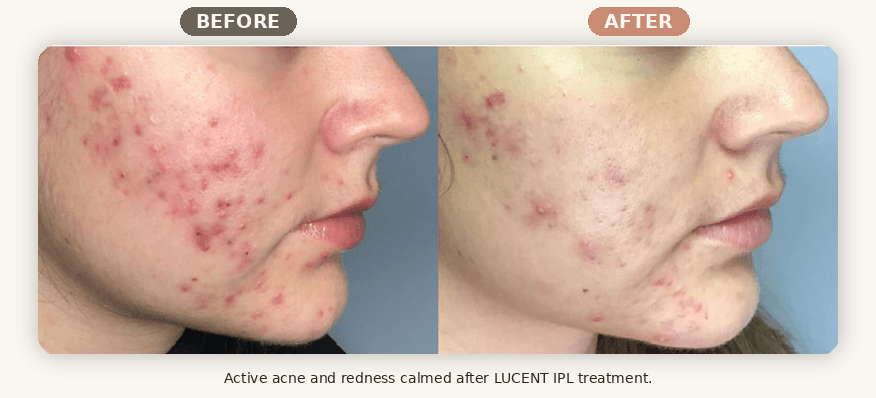
Can help calm active breakouts and the redness that comes with them, and fade the dark marks acne leaves behind. We offer a dedicated acne series.
Explore IPL →Chemical Peels
Exfoliate the outer layer of skin to help clear congestion, smooth texture, and even tone. A supportive option for milder acne and post-acne marks.
Explore Chemical Peels →Facials
Deep-cleansing, exfoliating facials help manage acne-prone congestion and keep skin clear between treatments, with no downtime.
Explore Facials →Medical-Grade Skincare
Good homecare makes a real difference for acne-prone skin. We can point you toward professional-grade products that help keep pores clear between visits.
Ask at your consultation →Before & after
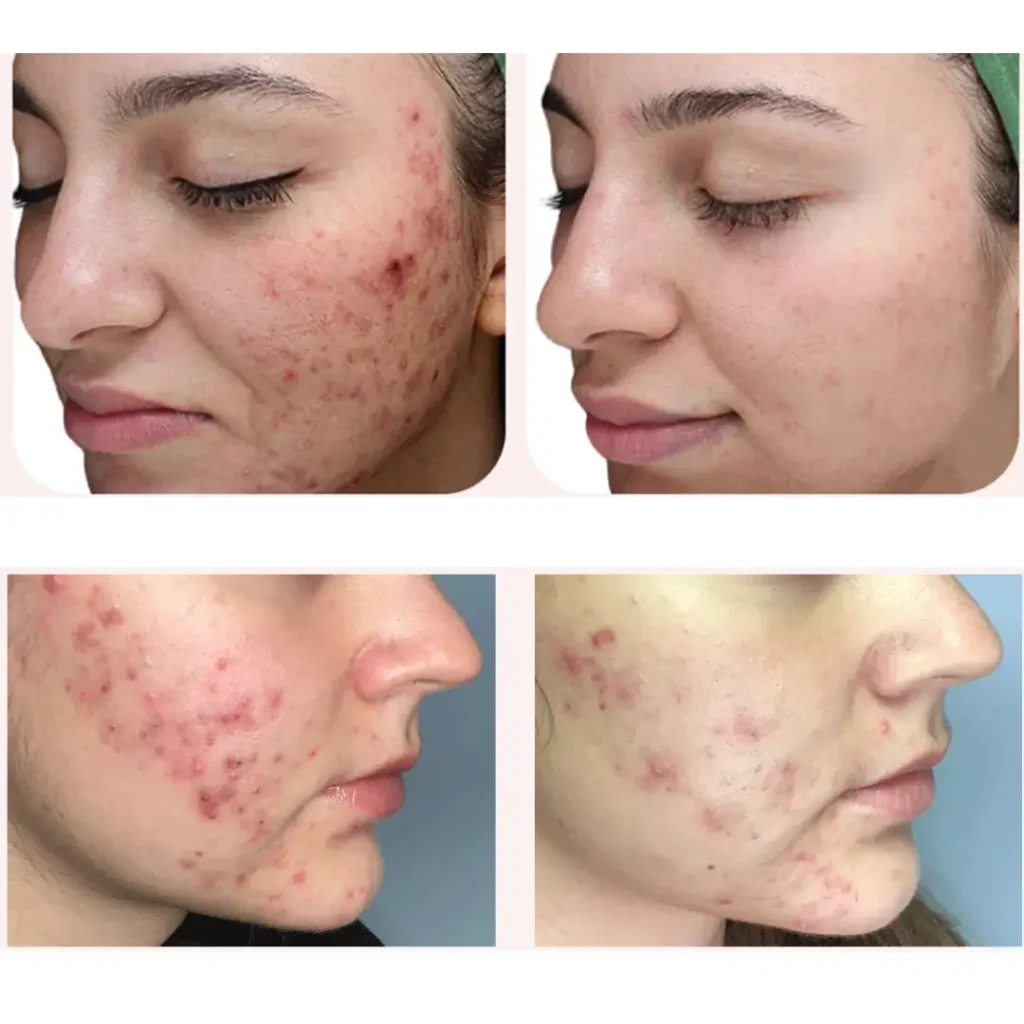
Individual results may vary.
Acne FAQ
It depends on your acne. Persistent, moderate to severe, or cystic acne is usually best managed by a dermatologist, since it often needs prescription medication. What we offer is supportive care: treatments and skincare that can help calm breakouts and improve acne-prone skin. Many people benefit from both. We are always happy to be honest about whether what we offer is the right fit.
Most acne treatments, including facials, peels, and IPL, have little to no downtime. We will tell you exactly what to expect for whichever treatments are in your plan.
Acne is a condition that is managed over time rather than cured in a single visit. Supportive treatments and good homecare can help, but ongoing or stubborn acne may need a dermatologist’s care. We will always be straight with you about what to expect.
Flat dark marks (post-inflammatory hyperpigmentation) often fade with IPL and peels. If you are dealing with indented or textured scarring rather than flat marks, that is treated differently. See our acne scarring page for resurfacing options.
With a free consultation. We look at your skin, identify what is driving your breakouts, and build a personalized plan. Book your consultation here.
Already cleared your acne but left with scars or texture?
See our Acne Scarring treatments →Let us take a look at your skin
If you are dealing with breakouts or the marks they leave behind, a free consultation is a good place to start. We will give you an honest sense of how we can help, and when a dermatologist may be the better fit.
Consultations are complimentary. We will help you find the right plan for your skin.