Skip to main content

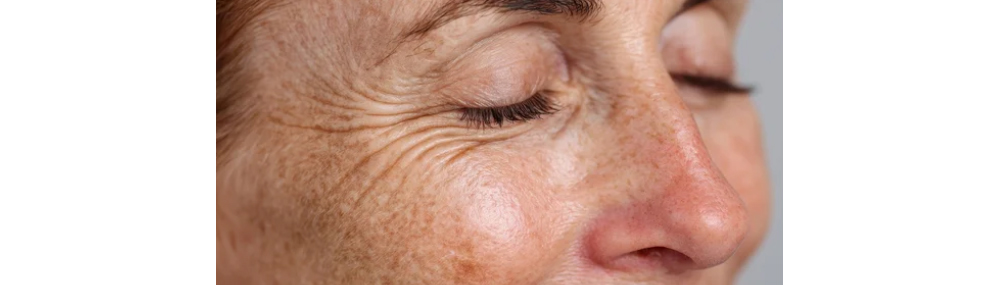
Keep the smile. Soften the lines.
The little lines fanning out from the corners of your eyes are a record of every smile, laugh, and squint, which is why they are often the first lines to appear. The good news: crow’s feet are among the most treatable lines on the face, and understanding what stage yours are in is the key to treating them well.
Crow’s feet form at the outer corners of the eyes, where a ring of muscle called the orbicularis oculi contracts every time you smile, laugh, squint, or wince. That muscle fires thousands of times a day, and the skin it moves is the thinnest on your face, with less collagen to spring back from each fold. Expression by expression, year by year, the creases begin to linger.
Crow’s feet start as expression and slowly become etched. Which stage yours are in decides the right treatment, and that is the first thing we look at.
Early on, crow’s feet are dynamic: they appear when you smile and disappear when your face is at rest. Over time, as collagen declines and the folding repeats, they can become static, visible even when your face is completely relaxed. The distinction matters more than anything else on this page, because dynamic lines and etched-in lines call for different tools, and treating the muscle is very different from rebuilding the skin.
Why crow’s feet form, and the stage that matters
Why they form
Crow’s feet come from a combination of movement and skin structure, which is why they show up earlier than most other lines.
- Constant muscle movement: the muscle around your eye contracts with every smile, laugh, and squint, folding the skin the same way thousands of times a day.
- The thinnest skin on your face: the eye area has less collagen and fewer oil glands than anywhere else, so it creases more easily and recovers more slowly.
- Squinting and sun: UV breaks down collagen, and bright light makes you squint, a double hit for the eye area. Sunglasses are genuinely preventive.
- Collagen loss over time: as the skin’s support thins, the same expressions leave deeper, longer-lasting creases.
Dynamic vs. static: the key distinction
Look in a mirror with a relaxed face, then smile. What you see tells you the stage.
- Dynamic lines appear with expression and smooth away when your face is at rest. The line lives in the muscle movement, not yet in the skin, and calming the movement treats it.
- Static lines remain visible even at rest. The repeated folding has etched into the skin itself, so the skin, not just the muscle, needs rebuilding.
- Most people have some of each: softer lines at rest that deepen with a smile. That is normal, and it is why a plan often combines approaches rather than picking one.
Treat the movement, rebuild the skin
Because crow’s feet live in two places, the muscle and the skin, we match the treatment to the stage. Dynamic lines respond to relaxing the muscle that folds them. Etched-in lines respond to rebuilding the skin they are folded into. Many people get their best result from the two together, and your free consultation is where we map that out.
Neuromodulators for Dynamic Lines
Botox, Dysport, Jeuveau, and Xeomin are the gold standard for crow’s feet. A few precise injections relax the outer portion of the muscle just enough that it stops folding the skin with every expression, while you keep your full, genuine smile. Done well, nobody sees the treatment. They see you, looking rested. Results appear within days and typically last three to four months.
- The gold standard for expression lines around the eyes
- Natural result: your smile stays, the crease softens
- Quick appointment, no downtime
Helix CO2 for Etched-In Lines
When lines are visible at rest, the skin itself needs rebuilding, and that is where our Helix CO2 laser excels. It stimulates fresh collagen in the thin, delicate eye-area skin, smoothing the etched creases and firming crepey texture that a muscle relaxer alone cannot address. It is one of the few treatments that can safely resurface this area, and it pairs beautifully with neuromodulators: relax the folding, then rebuild the skin.
- Rebuilds collagen where lines have etched in
- Smooths crepey eye-area texture at the same time
- Safe for the delicate skin around the eyes in expert hands
Protecting the eye area between treatments
The eye area rewards consistency. These support and extend whatever your treatment plan achieves.
Medical-Grade Skincare
A well-chosen eye-area routine, with a retinoid your skin tolerates, daily sunscreen, and real hydration, slows how quickly lines etch in and protects the collagen your treatments build.
Explore Medical-Grade Skincare →Eyelid & Under-Eye Skin Tightening
If crepey lids, hooding, or under-eye texture are part of your picture, the same delicate-area Helix treatment can address the whole eye area in one plan.
Explore Eye-Area Tightening →Free Consultation
The best first step. We look at your lines at rest and in motion, tell you honestly what stage they are in, and build a plan around your face and your goals.
Book a Consultation →Clearing up some crow’s feet myths
The eye area attracts more myths than almost any part of the face. Here is what is actually true.
Botox will freeze my face or fake my smile
A skilled injector relaxes only the outer portion of the muscle that folds the skin, at a dose that softens the crease while your smile stays completely yours. The frozen look comes from over-treatment, and natural results are the entire point of how we dose.
Crow’s feet only happen when you get older
Crow’s feet are driven by muscle movement, not by a birthday. People with strong, expressive smiles can see them in their twenties, while less expressive faces may not show them until much later. There is no fixed starting age for lines, and no fixed starting age for treating them.
A good eye cream can erase crow’s feet
Eye creams hydrate and can temporarily plump the skin so lines look softer, and a retinoid genuinely supports collagen over time. But no cream can stop a muscle from contracting or rebuild etched-in creases. Skincare is the supporting act here, not the fix.
Once you start Botox, you can’t stop
If you stop, the muscle simply returns to its normal movement and your lines return to their baseline, not worse than before. If anything, the months of reduced folding gave your skin a break. Continuing is a preference, not an obligation.
Crow’s feet FAQ
Whenever they start bothering you. Because these lines are driven by muscle movement rather than age, there is no magic number. If your lines still disappear fully at rest, treating the movement now also slows how quickly they etch in, which is why some people start preventively. We will give you an honest read on whether treatment makes sense for your face yet.
Yes, and this matters to us as much as it does to you. Crow’s feet treatment targets only the outer portion of the eye muscle, dosed so the skin stops creasing while your expression stays fully yours. Our goal is that people notice you look rested, not that you look treated.
Neuromodulator results typically last three to four months, with the softening visible within days of treatment. Laser resurfacing works on a different clock: the collagen it builds develops over two to three months and the improvement is long-lasting, maintained with skincare, sun protection, and occasional touch-up treatments.
Partially, and this is where honesty matters. A neuromodulator stops the folding, which softens lines and prevents deepening, but it cannot fill in a crease that is already etched into the skin. For lines visible at rest, we typically pair it with Helix CO2 resurfacing, which rebuilds the skin the crease lives in. The combination treats both the cause and the evidence.
Neuromodulator injections around the eyes take minutes, feel like small pinches, and have essentially no downtime. Tiny bumps or pinpoint redness settle within the hour for most people. Laser resurfacing in the eye area involves several days of redness and flaking as the skin renews, and we walk you through aftercare in detail.
The logic is real: lines etch in through repeated folding, so reducing the folding before creases set delays how soon they become permanent. That said, prevention only makes sense when there is genuinely something forming to prevent. We would rather tell you to wait than treat a face that does not need it yet, and we will.
With a free consultation. We look at your lines at rest and in motion, tell you which stage they are in, and build a plan, whether that is a neuromodulator alone, resurfacing, or the two in sequence.
Smile like you mean it
Book a free consultation. We will look at your lines at rest and in motion, tell you honestly what stage they are in, and build a plan that softens the lines while keeping your expression completely yours.