Scars are permanent. Their appearance isn’t.
Whether it came from acne, surgery, an injury, or a stretch, a scar forms where the deep structure of your skin was damaged, which is why creams never seem to touch it. Understanding what a scar actually is, and what type you have, is the first step toward making it far less noticeable. That is what this page is for.
A scar is your skin’s repair work. When skin is injured, whether by a surgical incision, a wound, a burn, deep acne, or rapid stretching, your body rushes to close the damage with new collagen. That repair collagen is laid down quickly and roughly, in dense, disorganized bundles rather than the neat weave of normal skin. The result is tissue that looks and feels different: shinier or duller, raised or sunken, lighter or darker than the skin around it.
A scar is collagen laid down in a hurry. Improving it means remodeling that collagen, and that happens in the deeper layers of the skin, where creams cannot reach but a fractional laser can.
That is why the honest starting point for scar treatment is depth. Surface products can hydrate and comfort a scar, but they cannot reorganize the collagen underneath it. Fractional CO2 resurfacing works at exactly that depth, breaking up the rigid scar tissue and triggering your skin to replace it with fresh, better-organized collagen. With each treatment, texture smooths, color blends toward the surrounding skin, and the scar draws less attention. Improvement, not erasure, and we will always be honest about that distinction.
The types of scars, and what shapes how they heal
The main types of scars
Scars vary widely depending on the injury, your skin, and how the healing went. The type matters, because it determines the right treatment.
- Atrophic (depressed) scars: indented or pitted scars that sit below the surface, most often from acne or chickenpox. These respond especially well to fractional resurfacing.
- Surgical and traumatic scars: lines and patches left by incisions, cuts, and wounds. Texture and color blending are where laser treatment shines here.
- Stretch marks: a form of scarring that occurs when skin stretches faster than it can adapt, tearing the collagen and elastin beneath the surface.
- Hypertrophic scars: raised, firm scars that stay within the original wound boundary.
- Keloid scars: thick, raised scars that grow beyond the original wound. These need specialist care, and we explain why below.
- Contracture scars: tight, pulling scars, typically from burns, that can restrict movement and belong with medical care.
What shapes how a scar heals
Two people can have the same injury and heal completely differently. Several factors decide how visible a scar becomes.
- Depth and severity: the deeper the damage reaches into the dermis, the more repair collagen is needed and the more visible the scar.
- Location: skin under tension or constant movement, like the chest, shoulders, and joints, tends to scar more noticeably.
- Genetics and skin type: some people simply build more scar tissue, and deeper skin tones can be more prone to pigment changes as scars heal.
- Age of the scar: scars remodel naturally for a year or more, fading from red or purple toward white or silver. Both fresh and mature scars can be treated, and mature white scars still respond.
- Sun exposure: UV darkens healing scars and makes discoloration permanent, which is why sun protection is part of every scar plan.
An honest note on raised scars
Keloid and significantly hypertrophic scars are a different problem. They come from an overactive healing response, and resurfacing a keloid, or treating someone with a history of keloid scarring, risks provoking more scar tissue rather than less. For that reason we do not treat keloids, and a history of keloid or hypertrophic scarring is a contraindication for our laser. The right resource for raised, growing scars is a dermatologist or plastic surgeon, who can offer options like injections, silicone therapy, or surgical revision. We will tell you plainly at your consultation if that is the better path for you.
Helix CO2: one laser, matched to where your scar lives
The Helix CO2 and 1570 fractional laser vaporizes microscopic columns of scar tissue at the surface while stimulating fresh collagen in the deeper layers where the scar actually formed. Dual wavelengths let us treat both the texture you can see and the structure underneath it in the same session. The approach is the same everywhere; what changes is how we plan it for the face versus the body.
Scars on the Face
Facial scars, including acne scars and surgical or injury scars, are treated as part of our Helix facial resurfacing. Because the laser renews the whole surface, it softens the scar while also refining texture, tone, and pores across the treated area, so the scar stops standing out against smoother skin. Facial skin also heals quickly, with downtime typically measured in days.
- Excellent for pitted acne scars and facial scars
- Renews surrounding texture and tone at the same time
- Many see meaningful change in one to two treatments
Scars on the Body
Surgical scars, injury scars, and stretch marks on the body are treated through our dedicated Stretch Mark & Scar Removal service. We treat one session at a time with per-area pricing, so you see how your skin responds and decide how far to take the result. Body skin heals more slowly than the face, and we plan your recovery window honestly so there are no surprises.
- Abdomen, arms, thighs, chest, and other body areas
- Per-session pricing by size, no upfront package required
- Results build with each treatment as collagen matures
What scar remodeling looks like
Both results below are from our Helix CO2 laser. Notice how the texture smooths and the treated areas blend toward the surrounding skin.
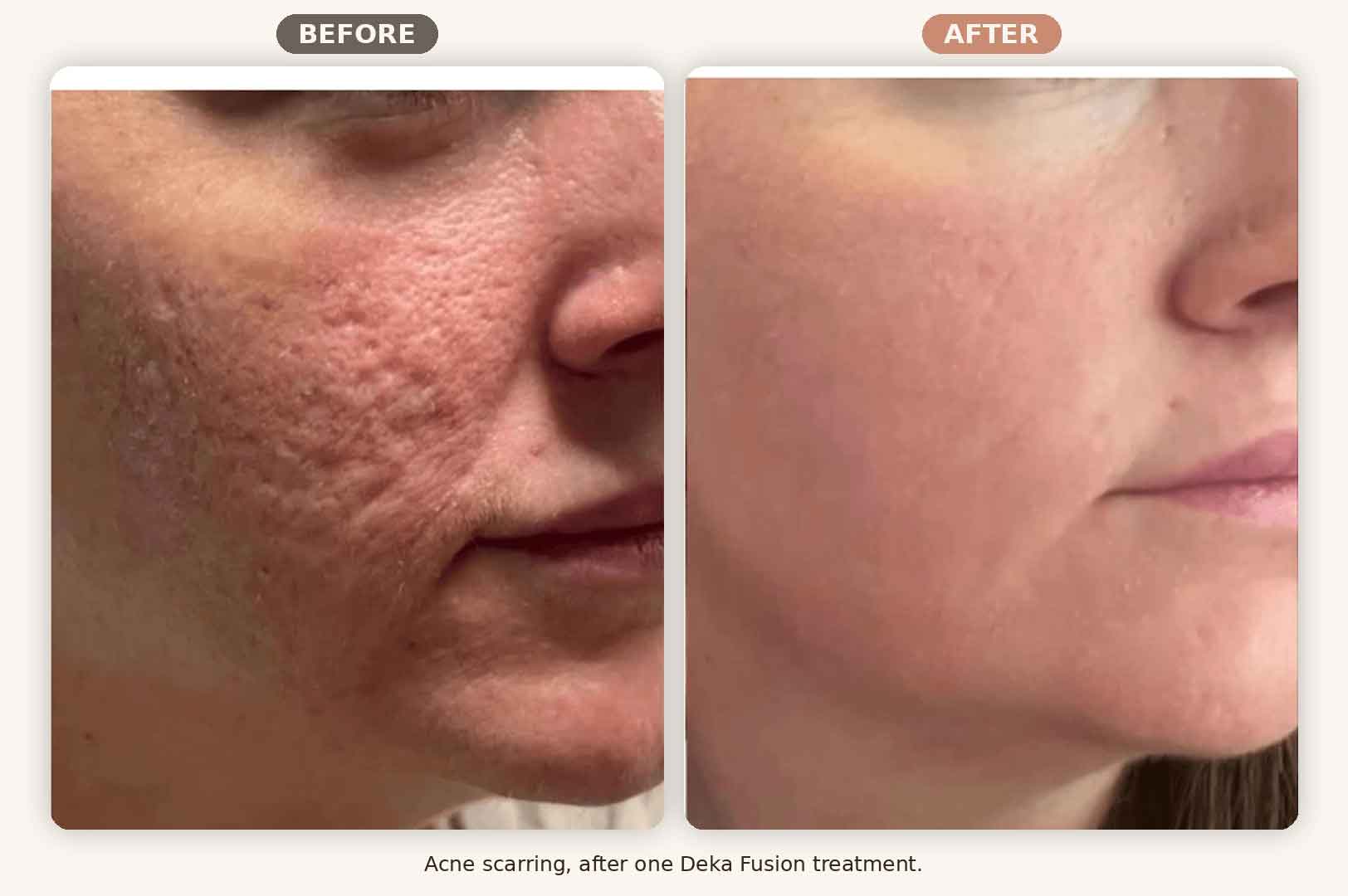
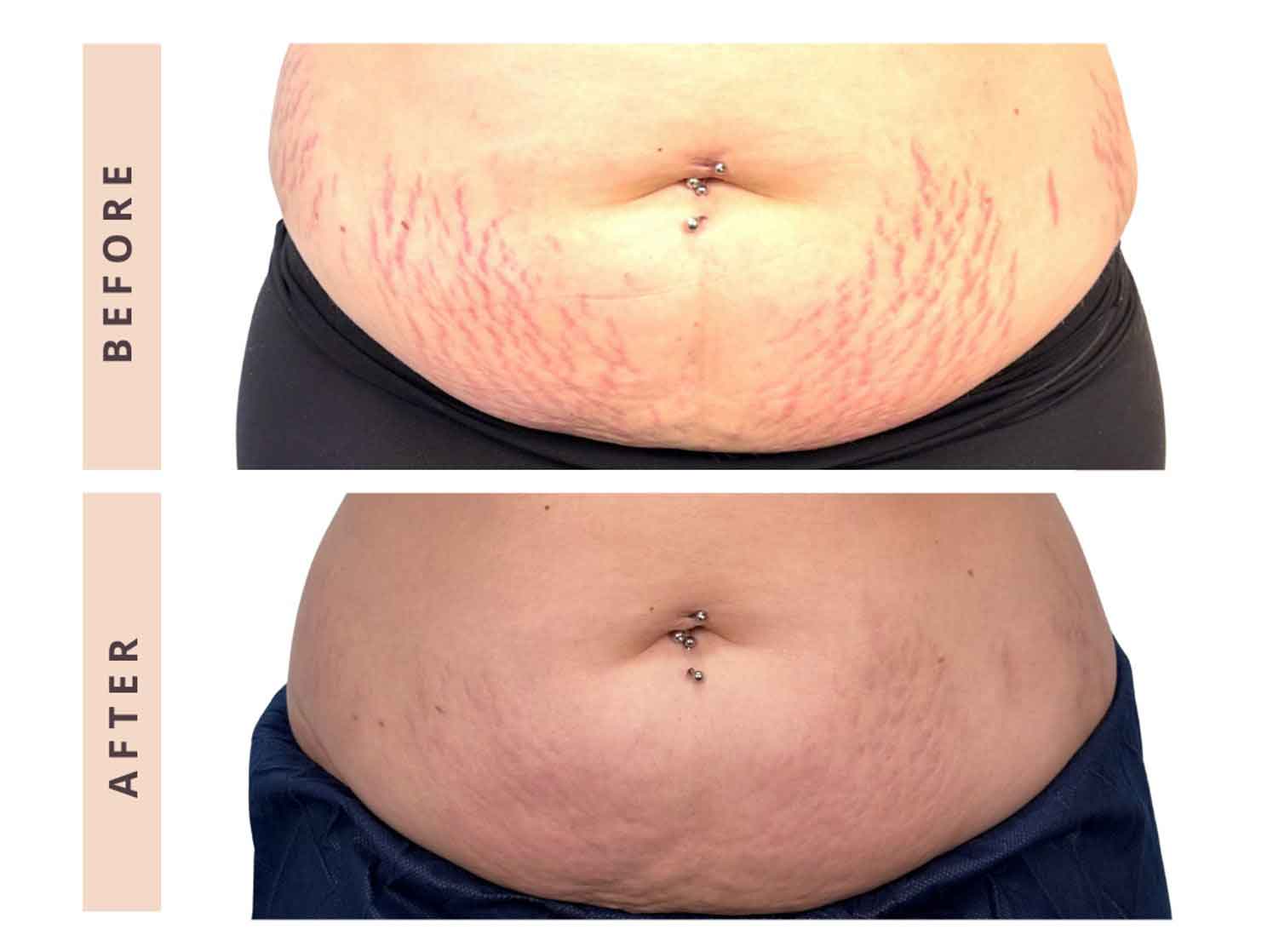
Individual results may vary based on the type, depth, and age of your scars and the number of treatments.
Closer to your concern?
Scarring shows up in different forms, and we have focused pages for the most common ones. Your free consultation is where we assess what you have and build the right plan.
Acne Scars
If your scarring came from acne, we have a dedicated page on the types of acne scars and how facial resurfacing rebuilds the skin they sit in.
Learn about acne scars →Stretch Marks
Stretch marks are scars in their own right, formed when skin stretches faster than it can adapt. See how we soften and blend them on the body.
Learn about stretch marks →Free Consultation
The best first step. We assess your scar’s type, depth, and age, set honest expectations, and build a treatment plan around your skin and your goals.
Book a Consultation →Clearing up some scar myths
Scar advice is everywhere. Here is what is actually true.
The right treatment can erase a scar completely
Scars are a permanent change to the skin’s structure, and no honest provider promises erasure. What laser resurfacing genuinely does is remodel the scar tissue so texture smooths and color blends toward the surrounding skin, often dramatically. Less noticeable is the honest goal, and it is a goal worth having.
Scar creams and oils will fix a scar
Topicals can keep a scar hydrated and comfortable, and silicone products can help flatten some raised scars, but nothing applied to the surface reorganizes the collagen underneath. That remodeling happens in the deeper layers, which is exactly where a fractional laser works.
Old scars are too late to treat
Mature scars, including white or silver ones that have been there for years, still respond to resurfacing. Their texture smooths and they blend better with the surrounding skin. Fresh and old scars alike are worth a consultation, and we will tell you what is realistic for yours.
Every scar can be treated with a laser
No. Keloids and significantly raised scars come from an overactive healing response, and lasering them can provoke more scar tissue, not less. Those belong with a dermatologist or plastic surgeon, and we will refer you honestly rather than treat a scar that is not a fit.
Scar treatment FAQ
Depressed and textural scars are the sweet spot: pitted acne scars, surgical scars, injury scars, and stretch marks. These involve damaged or disorganized collagen that fractional resurfacing can remodel. Raised keloid scars are the exception, they need specialist care rather than laser resurfacing, and we will tell you honestly which category yours falls into at your free consultation.
Acne scars are one of the things the Helix does best, and the before and after on this page shows a real result from a single treatment. Because acne scarring has its own types and considerations, we have a dedicated acne scars page that walks through them and how facial resurfacing rebuilds the skin they sit in.
It depends on the scar’s depth, age, and location, and the honest answer is that no one can predict it exactly. Many facial scars improve meaningfully in one to two treatments. For body scars we treat one session at a time, spaced about 6 to 8 weeks apart, and you decide how far to take the result as you see your skin respond. Improvement builds with each treatment as new collagen matures.
You will notice some change as the surface heals in the first few weeks, but the real improvement develops gradually as fresh collagen replaces the scar tissue over the following two to three months, and it continues building for months after your most recent treatment. Scar remodeling rewards patience.
It depends on the area. Facial treatments typically involve several days of redness and flaking. Body skin heals more slowly, with redness through about two weeks and pink that can linger for up to two months as the skin rebuilds. We plan your recovery window honestly at your consultation, and sun protection during healing is essential to protect your result.
It requires extra care and honest guidance. Deeper skin tones carry a higher risk of pigment changes with CO2 resurfacing, so settings, preparation, and sometimes the choice of treatment need to be adjusted. The Helix platform lets us customize energy for every skin type, and we assess your skin carefully at your consultation, including telling you plainly if the laser is not the right choice for you.
With a free consultation. We look at your scar’s type, depth, age, and location, set realistic expectations, and build a plan, whether that is facial resurfacing, a body scar treatment, or an honest referral if your scar needs specialist care.
Make your scar the least interesting thing about your skin
Book a free consultation. We will assess your scar honestly, tell you what is realistic, and build a plan to remodel it from within, on the face or on the body.